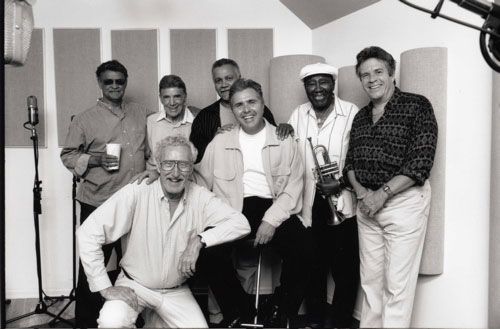
Monday, December 24, 2012

Interview with Max Bennett


Max Bennett is perhaps the most recorded bass player in the world, having recorded every year for 63 years, and counting. His work with Joni Mitchell (1974-77) represents a small portion of his vast discography; he has, over the decades, worked with a broad range of artists ranging from Billie Holliday to Frank Zappa, Mel Tormé to The Monkees.

I contacted him to see if he would grant me an interview to talk about his work with Joni Mitchell and he graciously spoke for an hour about that phase of his life, a time he still holds dear.

DB: Hi Max, I really appreciate you taking the time to talk to me. I'm looking at your website, utterly blown away by your discography! You've got to be the most recorded bass player ever!

MB: (laughs) Well, I've been around awhile and got really lucky as a kid you know, and I've had a great career and I'm still playing. [note: Max turned 83 last birthday]

DB: Let's talk about your time with Joni, since talking about your overall career would take weeks! Your website says that Joni heard you at The Baked Potato one night and asked you to play on a couple of tracks for, I suppose, what would become Court and Spark.

MB: I wasn't yet familiar with Joni at all. You know I was buried in the studio, working day and night and we started the L.A Express and were playing at The Baked Potato. Tom had worked with her, I think on either For The Roses or Blue, one of those two acoustic albums [ed. For the Roses] - he played some soprano sax on it - so somebody mentioned to her to come and see the band, because she knew Tom, and she came in and loved the band and asked us if we'd like to play on a couple of songs on her next album. Well, of course we were recording musicians, so we said "sure, fine." So we went to A&M where she recorded, and there was me, Joe Sample, John Guerin and Tom Scott - it was a quartet at the time. It became a quintet when we added guitar player Larry Carlton.

So, we listened to the songs, and Joe looked at me and I looked at him, and we thought, "I'm not sure if this is going to work or not," because it was so different. The harmonic structures that she used - it was so unique. Help Me was the first tune we did. We did the whole Court and Spark album there, and after that she asked us if we'd like to go on the road.

DB: So, obviously you guys were all crack readers. Did she have charts?

MB: There wasn't anything to read! She played, we made sketches of what we needed - she pretty much had it set what she wanted to do on a lot of her things. Tom wrote some background stuff too for her; you know he was very good at that. I didn't have much to do with that. I just made up my own bass parts, and everyone else made up theirs and we just worked it out. That's the way it happened.

DB: So did you spend quite a bit of time in the studio or did these sessions go quickly?

MB: I don't remember exactly how much time we spent, but I'm sure it was several days. It went pretty smoothly, particularly after the first tune. And then, you know, it was one tune after the other. Of course we weren't involved with the mixdown. We were all so busy we kind of took it lightly at first, because we were just working day and night jumping from one date to another. At that time I was running between 20 and 25 dates a week - movies, TV, commercials and whatever studio musicians do.

DB: That was the golden age for studio musicians wasn't it?

MB: Yes, I was so lucky I got in just at the right time. I started really getting busy about 1960. I'd been working a lot before that too. I was with Ella Fitzgerald in '58 and then I went back and worked with Peggy Lee, but I got so busy I couldn't go out of town, so I didn't work with Peggy Lee anymore; from that point on I was busy day and night.

DB: So if you were that busy in the studio it was probably a difficult decision to go out on the road with Joni?

MB: It was. It was a difficult decision. The money (touring with Joni) was pretty good, actually, and we loved the music and wanted to play it. We kind of took a loss in income but we thought we'd just go out for a short period of time; so the first tour we did, we didn't stay out all that long. Then the second tour was a much longer tour, later in 1974. Then we were off for most of 1975, but we did do some short touring with the L.A Express and Joni came along and hung out with us too. The extensive tour was in 1976 but the end of that tour was canceled after we worked the University of Maryland, but I'll get to that later...

DB: I'd like to know more about how the sessions went. Did Joni record her parts first and then you add on or did you all play live or what?

MB: As far as the rhythm section we did all that live. She played guitar with the rhythm section but most of her final vocals were overdubbed. Once we did the basic tracks we were off and running to the next thing, so we weren't really involved with the final process.

DB: I wanted to ask about what part Henry Lewy played because not much is written about him and I guess he and Joni were kind of the production team even though there was nobody credited as the producer.

MB: He was her engineer, pretty much, as far as I remember. She did all the producing pretty much herself. What happened when we weren't there I have no idea but I'm sure Henry made suggestions and so on, but she knew pretty much what she wanted to do. All the overdubs and everything, she took her time and planned all that out. She was really good at producing herself, she really was.

DB: So that's rather remarkable that she had such studio savvy herself.

MB: I thought so. Of course she'd done many things acoustically before that and I think that probably gave her the experience in the studio, down the road, do exactly what she wanted to do. She was very sharp about all that. Even though she couldn't read a note, in every other respect there was nothing amateurish about her approach at all. She really didn't understand harmonic structures as far as talking about this or about that; she just played and we sketched out what we needed and made up our own parts as we went.

DB: That's so extraordinary. I can understand that she didn't quite have the formal vocabulary to convey what she was doing, but the records sound so beautifully made and crafted it's amazing you were kind of figuring it out as you went.

MB: Yeah, well we were used to that. First of all, I must say, we were all jazz musicians and most of her contacts previously had been with folk singer-type guys and CSNY, and that was her whole bunch to hang with. But when she asked us she immediately became involved with what I would consider dyed-in-the-wool jazz musicians - there wasn't anybody there who I would say had some real commercial background. Jazz musicians were the best musicians, pretty much, in the studios because they were more flexible. The rock and roll guys weren't good at jazz and certain other things, and the legit guys weren't good at either one of those two. But the jazz musicians were very adaptable...rock and roll, funk, whatever you want to call it. So we were fortunate in that sense, and we ended up doing the bulk of the work too [ed. the session work in L.A]

DB: I got the impression that the Funk Brothers did the same thing for Motown too. They were all from jazz backgrounds too.

MB: At that time in the studios there were so many rhythm section players and they were all busy too, but you hardly ever saw a date with less than three guitars on it. One guy to do the "chinks", one guy to do acoustic rhythm, and the other guy to play something else...

DB: Tell me a little bit about the touring years with Joni. You said you took a bit of a cut in pay to do that but was that a pleasurable time?

MB: We were making good money, if you stopped to think about what we did, we were doing very well, but we were doing so well in the studios that it didn't really compensate completely, plus the fact that we were out of town and missed a lot of dates, and so on. But the tours were wonderful. Everything was first class. We had limos everywhere, we had private planes and private buses and she treated us beautifully. Great places to stay, good food always, and wonderfully appreciative audiences... I remember one gig in particular, we were back east somewhere, and we would do our bit with the L.A Express, then there would be an intermission, then she would come on and do about five songs with the L.A Express, then we would get off the stage. She would do her acoustic set, and when she was doing that we had nothing to do so I used to walk into the back of the audience, as they were watching her, and you could hear a pin drop. People were so attentive. We had great, great, appreciative audiences; it was wonderful. As far as tours go - I've been on several tours - this was the epitome of any great tour I've ever been on. Everybody got along great, even the roadies... It was just great. Great tours.

DB: You can kind of tell that on the Miles of Aisles album that the audience was hanging on every word.

MB: Yeah. The Miles of Aisles album - all that was recorded at Universal. That's before they had the inside thing...we were outside, and they had heaters underneath the floor of the stage so we could stay warm! Wally Heider did those recordings. He recorded every night for I think a whole week, and then they picked the best out of that. The picture on the front is from Pine Knob, outside of Detroit.

DB: Let me ask you about A&M studios. Was that a studio you worked in all the time?

MB: Yes, I have no idea how many dates, in the hundreds for sure. They had several different studios: studio A was a big studio. As you walked in the door, on the left hand side was the studio we used quite a bit with Joni and she definitely used that studio for all the mixdowns. That might have been studio C I think. There was studio B on the right hand side and behind that there was a D studio. There were actually four studios at A&M -that studio used to belong to Charlie Chaplin.

DB: Did you like the sound they got there? I guess what I'm asking is, when you got the finished albums that you had played basic tracks on, were you pleased with the results?

MB: All the studios there were good. Two things make a good studio: good acoustics in the studio and good engineers, and the ease of playing, how everything is set up and so on. But I was always very comfortable at A&M. As a matter of fact, all the L.A Express albums were done there except for the very last album which was done up in the mountains above Denver.

DB: Specifically, did you run direct or mic your bass cabinet for your bass parts back then?

MB: If I remember correctly, they started with the mics but were able to get a little more sophisticated as we went along. I remember when 8-track came in it was a big deal. Then all of a sudden it was 16 track, then 24, then 32. Once they had more tracks they would mic the amp and run a direct signal and use a combination of the two.

DB: Did Joni arrange her own background vocals?

MB: Yes, yes, all overdubs. Once we did the basic tracks we were off the scene but she did sing with us at that time [ed. during basic tracks recording] but I imagine those vocal tracks were just tracks so we could hear what was going on 'cause hearing her voice made a big difference in what we would play, at least from my point of view. I'm sure it was everybody else's too. You know, listening to her sing is an inspiration because you want to fit whatever you're doing into what she's doing. Particularly when there's a vocal I do not like the idea of making tracks first, unless it's some commercial thing where it's already cut and dried. That's obvious, but for something creative like that, I want to hear the vocal at the same time, even if they don't keep it; generally speaking they'll take it off and put a different vocal on depending on how good it was to start with.

DB: Once Joni and John Guerin were together as a couple did that change the dynamic of working together as a band?

MB: Not really. Of course they were living together - I guess that's common knowledge, I don't know. It didn't change anything as far as the tours were concerned, or the music. They were very tight but she was very good about including the guys who were doing all the work with her. It was more of a personal relationship as opposed to a business relationship.

DB: Going back to recording with her vocal in your headphones were you paying attention to the lyrics or getting ideas from the lyric content?

MB: I don't know if I'd have been specifically aware of that but I'm sure it played a part, because, you know, we would run the tunes down and everything and develop what we wanted to do within the music, and of course we did make up our own stuff because nothing was written. Naturally we'd make some notations on our own charts so we had a format to follow etc etc. But when you finally get that together plus the vocalist everything sort of complements the other thing in a way.

DB: But Joni as a lyricist was supreme and she paints these wonderful pictures with her lyrics and I was wondering how much that inspired the performances?

MB: It's hard to say but I'm sure it did, even in a subconscious way. Because she would always sing on the basic tracks and I always appreciate hearing the vocalist when we're doing the tracks, especially in the situation with her, as it's far more a creative process than it would be if it was just a commercial recording you were doing.

DB: Was there ever a song of hers that you heard and didn't particularly care for?

MB: Not really. I think all of the things that she did, when I was involved, I really liked. I can't think of anything she did where I thought "oh, don't do that." Her later things, some of the tunes I wasn't that in love with, but that doesn't really mean anything...that's just personal preference.

DB: Are you talking about her 80's and 90's projects?

MB: Yeah, some of the projects didn't appeal to me as much, you know, just personal taste. It's interesting you know, because that was such a great time; everything was so spontaneous, and that with the crowd reaction, the whole thing together was so good, and so right, and so musical that it's difficult to compare what I heard later in her approaches. But that's the way she was. I would assume that probably for anybody that does that there's little things along the way that aren't as great as maybe something before or something that's going to happen afterwards, but she was great on experimentation, and I give her kudos for that.

DB: She probably wanted to feel like she was not an anachronism and wanted to stay current.

MB: Not too long ago, a couple of years ago, my wife and I had dinner with her and went back to her house and spent quite some time listening to a ballet, a brand new ballet that was using all her music. So, she was always interested in doing something different, which is great. For a talent like that, I think it's a given.

DB: It's fascinating to us devotees to see how her painting and her music are kind of intertwined. She wrote music and lyrics that had a very painterly quality and I don't know how the music infused the painting but it always seemed like they were intertwined to me.

MB: Yeah. Great lyricist. I mean, if you just take the time to listen to her lyrics there's really a great message there.

DB: Herbie Hancock said recently something like 'I'm a jazz man and I've worked with some of the great singers, but I never paid any attention to the lyrics until I worked with Joni Mitchell and I realized I'd missed out on this whole world.'

MB: I discussed that with her quite a bit and she mentioned that when they were recording that she pointed out a few things to him - shall we say, they were subtle, polite corrections in his playing, as opposed to what he was doing behind her. She mentioned that to me - it was kind of a laugh, in a way. He's a great musician, but the reason I get that is that when I first started as a jazz musician I didn't pay much attention to the lyrics either. I grew up in the swing era and the bebop era - that's what I got into. And my first influences were Duke Ellington, followed by Nat Cole. Then I got into the big band things although I still like Duke's band far more. Woody Herman's band I loved. Tommy Dorsey had a great band, but too commercial for my ears. But then down the road as I started playing with more vocalists - I didn't do that until later... Peggy Lee was the first person I worked with where I really started paying attention to the vocals and saw how they affect the music; she, by the way, was great to work for; very intellectual and very particular. She did a lot of commercial things but there was a special way that she did everything. And of course I got to work with Ella Fitzgerald, and I also got to work with Lady Day too, [ed. Billie Holliday's nickname] and Barbra Streisand...but that's another story! So I know where he's coming from there.

[ed. The subject of Herbie's Grammy winning album River: the Joni Letters did come up, and Max does not have a favorable opinion of it. Here's what he himself posted on Amazon.com about it:

The most boring album of the year!, April 9, 2008
I'm a professional musician. Along with Tom Scott, I started the group L.A Express in the 70's and performed on Joni Mitchell's albums, Court & Spark, Miles of Aisles, etc. This CD, which won the Grammy album of the year, is not worth buying. The musical wanderings of Herbie and the almost unrecognizable songs of Joni's are an exercise in musical futility. Herbie needs a tinkle-ectomy and most of the vocalists are totally underwhelming. Obviously, this was a politically motivated choice by NARAS!!!!!!!!!!!!!!!
Max Bennett, bassist and composer.]

DB: You keep referring to commercialism, and it seems like the artists you most enjoyed working with had a kind of un-commercial streak to them, if that's fair to say, and yet the L.A Express was kind of 'instrumental' in making jazz more commercially mainstream again.

MB: I don't get that.

DB: Well, you were introducing funk and more of a contemporary groove to jazz, which had maybe lost some of its audience in the 60's.

MB: Possible, yeah. I think what happened is Bebop kind of wore itself down. Although I must tell you, I'm not a purist. I'm for anything that contributes to the overall situation. For instance I got a lot of static from good jazz musicians 'Oh, you sold out' because I started playing electric bass. "What do you mean, 'I sold out?'" If the music is good, there's very little difference in real contemporary (jazz) ...I'm not talking about this Cool Whip crap! This smooth jazz - rule that out totally. To me it's mundane, starts nowhere, goes nowhere, singsongy, repetitive crap. There's no intrinsic value to it whatsoever. But it doesn't make any difference if the rhythm section happens to be electronic if the songs are good, they have substance and the soloists are great and play really good solos. That's all you need. This whole thing about 'well, you've got to be a purist.' String bass, acoustic piano...that's great, but I did that for fifty years. But let's move on here, okay? I guess some people thought because we didn't use acoustic instruments and all that, the L.A Express when I started it - because it was my concept... Tom Scott had this Bebop quartet signed with A&M and they dropped his contract because he wasn't selling any records.

I'd worked with Tom in the studios. I got a call from him to come down to the Lighthouse and play on a Sunday afternoon, and I said "great." It was Tom, Joe Sample, and I can't remember who the drummer was - I think it was Ed Greene, who was a studio guy - and I said "is it okay if I play Fender?" and he said "sure" because he had been using a really great bass player called Chuck Domanico on string bass. [ed. Chuck plays upright bass on Blue Motel Room] Chuck never took to electric bass. So I went down and I took one tune, the very first instrumental I ever wrote, called "TCB in E," and we started playing, and something just clicked. It was just different. And Tom was kind of excited, and said "can you come back next Sunday?" So I went back the next Sunday and he brought a couple of tunes, and we revised his tunes to fit the format that I had started. So we did that for two or three weeks. The next thing you know, John Guerin had come back off the road with Roger McGuinn, and we started doing Tuesday nights at The Baked Potato. That started it - we had a quartet. By the time we'd played three or four Tuesday nights there the place was totally packed, because of the concept of the band. But I kept telling Tom we needed a guitar player so I could write the double line, the tenor and the guitar together. He wasn't sure - it would destroy the space dadadada...he didn't know if Joe Sample would like it. I said, "I play with The Crusaders and they've got Larry Carlton, and that seems to work out okay." So finally we hired a guitar player whose name I won't mention - he was okay but he just wasn't right. Larry Carlton walked in one night and that was it! And that's what became The L.A Express. But we didn't have a name yet. One night I had to go to work with Lalo Schifrin downtown at The Dorothy Chandler. And I was talking to Louis Shelton, guitar player, and I said "Louis, we've got this great quartet and it's got this really strong feel, like an express train" and he said "how about The L.A Express?" and I said "yes!" So I went to the payphone and called Tom Scott and said, "I got the name for the band... L.A Express." So it became, because of Tom, Tom Scott and The L.A Express.

DB: So Larry Carlton was a monster from the start!

MB: Yes, he was great and fit the band beautifully. It's a very subtle thing with guitar in a rhythm section like that; you have to learn what not to play, cause it's so easy to start playing a bunch of rhythm and it gets in the way, and that's what the first guitar player did. The concept of L.A Express I would say was rock-ish, latin-ish, blues-ish jazz. It had all those elements, exactly like the band I have now. (Private Reserve)

Another thing is, I played all the great standard tunes for so many years that I wanted to write some tunes. So, this 'you sold out' thing is crap. They're just jealous because nobody wants to sit down and listen to a guy play fifteen choruses! If they want to keep doing the same thing they've been doing all their life, fine, but for me, I like to move on now and then! And I got lucky with that concept.

DB: Steering back towards Joni... you played on several Joni albums that have proven to be some of the finest albums of the last forty years: did they seem that special when you were cutting them?

MB: Work was work, but it did seem like extra fun, it really did. We were pretty serious about the whole thing and just tried to do our very best. I don't remember being totally ecstatic about any particular thing but it was just a great pleasure to work with her. I loved her songs - it was a totally new concept - none of us had been involved with anything like that. With all due respect, we weren't very much into what was known as 'folk singing,' but she was above and beyond that. She used to tell me guys used to tell her "that's not the way you tune a guitar!" "Well, that's the way I do it," she told them - it was totally unique. I asked Robben Ford "how is she doing that?" and he said "I have NO idea what she's doing!"

DB: So, if Larry was the original L.A Express guitarist by the time Joni discovered you guys, where does Robben come into the picture?

MB: Larry decided he didn't want to go on the road, and he was working with The Crusaders. We were both working with The Crusaders at the same time... I don't remember who knew of Robben or who contacted him first. He was only twenty when he joined the group.

DB: You worked on the Joni albums through Hejira. Then I guess Jaco came along and she started using him. Were you friends with Jaco or what was your impression of him?

MB: You mean as a person or as a player?

DB: Well obviously he sort of took the world by storm as a player, but did you like what he was doing and did you know him as a person?

MB: I knew him a little bit as a person. The very last tour we did with L.A Express was what I call 'the circuit.' - L.A, San Francisco, Portland, Seattle and Vancouver. So we went up the coast with us opening for Herbie Hancock. I don't know who was playing bass with him at that time but all of a sudden he got up one day and said "I can't do it anymore, I gotta go home." So in an emergency they called Jaco, and he came on the road. So I got spend two or three days with him, and I loved what he did. He's a marvelous, marvelous player, and a complete.....what's the word... he was really off his rocker! He had some serious mental problems. He had to take certain medication all the time just to stay even, and lots of times he went off his medication. He drank a lot, I remember. But, I liked him as a person and I LOVED his playing.

DB: So, I guess on Hejira, Joni met him and brought him in after she'd completed the album already. This might be a touchy question but did he replace any of your parts?

MB: Not that I know of. But I haven't listened to that album in a while, so in fairness I couldn't really answer that question. I'd have to really listen to it. I'm sure I could tell the difference, cause he had a different sound than I did. I did use a couple of different sounds on that album.

DB: Well, we've covered a lot of ground and it's been really fascinating, Max. Do you keep in touch with Joni to this day?

MB: It's been a couple of years, and she's changed her telephone number. But we've always been friends, and like I say we went to dinner and she invited us back to the house to listen to the ballet thing. She's a great gal, she really is. I have the original watercolor she did of I'm a Radio, that she gave me for my birthday. And also, for the last L.A Express album we did, Shadowplay, she did the cover art. And then she made that into a print on cloth. And I rolled it up and put it away. Now thirty years later I found it and just had it put in a frame. It just looks great; she's a great talent, a wonderful artist.

DB: One more question, not Joni related... could you talk a little about your experience recording with Frank Zappa; in particular the Hot Rats album from 1969?

MB: Yeah, I had an evening off, I think it was a Tuesday evening, and I got a call from John Guerin and he asked if I was working that night and I said "no, I was going to stay home." He said "I've got a double session for you," [ed. a 'session' is a three hour block defined by the Musician's Union, and pay is per 'session,' not per hour.] I didn't know Frank but I'd heard about his music of course, so I called the cartage company and they delivered my stuff [ed. studio musicians were so busy they had their equipment delivered and set up by cartage companies so the player could walk in the door and be ready to record in minutes, often at several studios per day.] I got there and we proceeded to do the Hot Rats album. That was interesting because, there again, we just made it up. Frank would have a skeleton idea of what he wanted to do and we just put it together. It was kind of like the stuff we did with Joni, although he wasn't quite as specific as she was on what she was doing. We did a lot of tracks and a lot that would run 10-15 minutes. As a matter of fact, after I moved down here, I realized that he had cut those up and re-arranged them, and overdubbed different things; so, as it turned out, I ended up on five different albums of his! I know we did at least three nights of double sessions. And then I played some shows with him in L.A and San Diego. He was a great guy. I liked the first music we did with Hot Rats because it was more jazz type, you might say, where everybody was using their own input to make this thing happen. From what I understand, that album got the best reviews of any album he did. I got a call from Frank about a month or so after we did the album and he wanted to know if I could work with him, and I told him I didn't think I could because I was too busy working in the studios. And he said, well let me send you the album, and I'll call you back in a couple of weeks, so he sent it to me and I thought, wow, this looks like a lot of fun! So I started doing a few jobs in L.A with him and we started rehearsing at night, but I had to quit because I was just working too much. The band I played with was Ian Underwood, Sugarcane Harris, I can't remember who played drums at first. [ed. Wikipedia lists John Guerin as the other drummer.] Later on, Aynsley Dunbar joined us. And of course there was Frank himself. I know we worked the Olympic and several other places including some out of town jobs.

Frank was a real taskmaster. And then the rehearsals when we started involved a lot of reading and the music had a lot of super duper ethereal kinds of things and it's not my trip. I don't really enjoy that that much. I appreciate atonal music but it's not really my cup of tea. I wasn't all that comfortable doing it and I realized I didn't have the time either so I told him "Frank, I love the band but I can't do it anymore; I'm just too busy." I was playing till 1 o'clock in the morning in the studios and rehearsing from 1.30 to 4am and then having to get up and make an 8 o'clock call at Universal. I couldn't do it!

DB: Speaking of rehearsing , did you rehearse with Joni much, especially before tours?

MB: Yes, we did. We usually spent two weeks before the tour rehearsing. It was interesting because the music was so elusive harmonically that if we were away from it for more than two weeks we usually had to run it again in rehearsal because it was so unique that we really needed to bone up on it again, just to make sure we had all our ducks in a row, you know. A friend of mine who builds basses wanted to do an interview with me recently and he wanted me to sit down and play with the album along to Help Me, and I had to get the album out and run through it; if you held a gun to my head I couldn't play it just from memory!

DB: I don't suppose you have any of those scratch charts that you did stuffed in a drawer somewhere? Those would fetch some money on Ebay!

MB: No, I don't. We probably pitched them. I guess I don't think very commercially like that! The same thing happened with the name "L.A Express." Since I had come up with it I went out and had the name copyrighted. But after a few years it was going to cost me a thousand dollars to renew it, and I thought, we don't have the band, so why don't I just drop it? Well, guess what? It wasn't more than a month after that the football team picked it up. If I had still owned that name and they wanted to buy it I could have made some money for myself! Coulda, woulda, shoulda!

DB: Regarding the keyboardists on the Joni tours. If Joe Sample was the keyboardist in L.A Express how come he didn't tour with you guys?

MB: When we went on the road with Joni, Joe said he couldn't go because he was one of the original members of The Crusaders and couldn't leave town.

DB: I want to thank you so much Max for taking the time to talk to me. This has been so fascinating to learn about that time from someone who was right there.

MB: Well, I'm glad to do it. I hope you don't feel I was overstepping my bounds talking about the jazz thing, but I'm really sick and tired of purist guys telling me I was selling out. I did all that, playing string bass for many many years and loved it. But I got tired of just playing standards, and that's why I started to write. How many times can you play How High The Moon before you get really sick of it?!


by Dave Blackburn


Wednesday, October 31, 2012

V/A - Book A Trip/The Psych Pop Sounds Of Capitol Records


V/A - Book A Trip/The Psych Pop Sounds Of Capitol Records
Now Sound Records CRNOW 10 (2010)


Track Listing:
1. Book A Trip
2. Chris Craft No. 9
3. I Need You
4. Yesterday Noontime
5. Strawberry Tuesday
6. Popcorn Double Feature
7. Autumn Afternoon
8. Robins Robins
9. Lady in Lace
10. Whisper Words
11. I Think I'll Just Go and Find Me a Flower
12. Cynthia At the Garden
13. Written Charter
14. My Mind Goes Traveling
15. Hitchhiker
16. Mr. Sun
17. Let the Trumpets Sound
18. Poster Man
19. When Charlie's Doin' His Thing
20. (Would You Believe) It's Raining Flowers in My House
21. Flying on the Ground
22. Pleasure of Her Company
23. Yours Till Forever
24. Yesterday Holds On
25. Don't Take the Night Away
26. Seventeenth Summer


Personnel:
This Side Up - Book A Trip
John Sherrill - Bass, Backing Vocals
Allen Arkus
Stuart Royal - Keyboards, Backing Vocals
Ronnie Seitel - Guitar, Backing Vocals
David Rosenthal - Vocals, Percussion
Kelso Herston - Producer
Frank Friedman - Rhythm Guitar, Harmonica

The Shanes - Chris Craft No. 9
Svante Elfgren - Bass
Tor-Erik Rautio - Drums
Anders "Henkan" Henriksson - Producer
Tommy Wahlberg - Guitar, Vocals
Lennart Grahn - Vocals
Kit Sundqvist - Keyboards, Guitar, Vocals

Chris And Craig - I Need You
Carol Kaye - Bass
Hal Blaine - Drums
Steve Douglas - Producer
Chris Ducey - Vocals, Guitar
Craig Smith - Vocals, Guitar

The Act Of Creation - Yesterday Noontime
Bill Franz - Drums
Ken Whitman - Guitar, Backing Vocals
Marc Sampson - Bass, Vocals
Eric Sampson - Rhythm Guitar, Reeds, Backing Vocals

Sidewalk Skipper Band - Strawberry Tuesday
Tom Jukem - Drums, Percussion
Joe Ballestrieri - Vocals, Bass
Rick Novak - Vocals, Twelve-string Guitar, Bass, Percussion
Ken Mansfield - Producer
Brian Ballestrieri - Vocals, Guitar, Hammond B3 Organ
D.A. McDowell - Vocals, Guitar, Harpsichord, Bass

Tim Wilde - Popcorn Double Feature
Tim Wilde - Vocals
Art Wayne - Producer
Bob Halley - Producer, Arranger

Teddy Neeley Five - Autumn Afternoon
Perry Botkin Jr. - Arranger
Billy Patton, Ray Pohlman - Bass
Hal Blaine, Paul Tabet - Drums
Michael Melvoin - Electric Piano
Al Casey, Lynn Ready, Mike Deasy, Jerry LeMire - Guitar
Larry Knechtel - Keyboards
Teddy Neeley - Vocals
Producer – Steve Douglas
Gary Coleman - Timpani, Percussion, Vibraphone, Congas, Bongos

Fargo - Robins Robins
Dean Wilden - Bass
Tony Decker - Guitar
Marty Cooper, Ray Ruff - Producer

Stained Glass - Lady In Lace
James Bond - Arranger
Jim McPherson - Bass, Vocals
Dennis Carrasco - Drums
Bob Rominger - Guitar
John Gross, Max Hoch - Producer

The Staccatos - Whisper Words
Brian Rading - Bass
Mike "Bell" Belanger - Drums
Rick "Bell" Belanger - Drums, Vocals
Vern Craig - Guitar, Vocals
Nick Venet - Producer
Les Emmerson - Guitar, Vocals

Moorpark Intersection - I Think I'll Just Go And Find Me A Flower
Terry Johnson - Bass
James Kehn - Drums, Vocals
Michael Dean - Flute, Piano, Vocals
Jay Lewis, Matthew Hyde - Guitar, Vocals
David Axelrod, Bob Padilla - Producer

Sidewalk Skipper Band - Cynthia At The Garden
Tom Jukem - Drums, Percussion
Joe Ballestrieri - Vocals, Bass
Rick Novak - Vocals, Twelve-string Guitar, Bass, Percussion
Ken Mansfield - Producer
Brian Ballestrieri - Vocals, Guitar, Hammond B3 Organ
D.A. McDowell - Vocals, Guitar, Harpsichord, Bass

The Tuneful Trolley - Written Charter
Brian Parks - Bass
Jerry Vance - Musical Director
Jack Riolo - Drums
Santo Ciccarello, Anthony Bordonaro - Guitar
Joey DeSane - Vocals
Paul Conocenti - Organ
Sandy Yaguda - Producer

The Exception - My Mind Goes Traveling
Frank Tesinsky - Arranger
Billy Herman - Drums
James Vincent Dondelinger - Guitar, Vocals
James Nyeholt - Keyboards
Peter Cetera - Vocals, Bass

The Four Preps - Hitchhiker
Leon Russell - Arranger, Conductor
Glen Larson - Baritone Vocals
Ray Pohlman - Bass
David Somerville - Bass Vocals
Jim Gordon - Drums
John Gallie - Electric Piano
Al Casey, Glen Campbell, Mike Deasy - Guitar
Larry Knechtel - Piano
Al De Lory - Producer
Martin Inabnett, Bruce Belland - Tenor Vocals
Emil Richards - Vibraphone, Percussion

The Lettermen - Mr. Sun
Perry Botkin Jr. - Arranger
Kelly Gordon - Producer
Bobby Engemann, Jim Pike, Tony Butala - Vocals


The Lively Set - Let The Trumpets Sound
John Guerin - Drums
Hank Levine - Arranger
James Bond - Bass
Benjamin Barrett - Conductor
Arthur Wright, Howard Roberts, Louis Morell - Guitar
Gerald Wiggins - Piano
David Axelrod - Producer
James Henderson - Trombone
Allen DeRienzo, Anthony Terran - Trumpet
Charles Stokes, Dave Practman, Diane Roshay, Jerry McLain, Kenneth Ballard, Susanne Roshay, Terry Smith - Vocals

The Carnival Connection - Poster Man
Jimmy "Wiz" Wisner - Arranger
Joe Mack, Pete Carson - Bass
Al Rogers, Buddy Salzman, Nicky Katsos - Drums
Charlie Macey, Jean-Pierre Lauzon - Guitar
Artie Butler, Leroy Glover, Paul Griffin - Keyboards
Bill Hill - Guitar
Allan Nicholls - Vocals

The Phoenix Trolley - When Charlie's Doin' His Thing
Christie Thompson - Vocals
Charlie Weiss - Keyboards, Guitar, Vocals, Producer, Arranger
Stephen Schlaks - Keyboards, Vocals, Producer, Arranger

Sidewalk Skipper Band - (Would You Believe) It's Raining Flowers In My House
Tom Jukem - Drums, Percussion
Joe Ballestrieri - Vocals, Bass
Rick Novak - Vocals, Twelve-string Guitar, Bass, Percussion
Ken Mansfield - Producer
Brian Ballestrieri - Vocals, Guitar, Hammond B3 Organ
D.A. McDowell - Vocals, Guitar, Harpsichord, Bass

The Summer Snow Featuring Phoenix Trolley - Flying On The Ground
René Hall - Strings Arrangement
Jimmy Faragher - Bass, Backing Vocals
Danny Faragher - Celesta, Clavinet, Backing Vocals
Casey Cunningham - Drums
Greg Tornquist - Guitar
Pam Parker, Rudy Parker - Vocals
Dan Dalton, Rusty Evans - Producer

Burgundy Street Singers - Pleasure Of Her Company
Jimmie Haskell - Arranger
Carol Kaye - Bass
Jesse Ehrlich - Cello
Hal Blaine - Drums
Don Peake, Mike Deasy - Guitar
Michael Rubini, Robert McPherson - Keyboards
Gary Coleman - Percussion
Wes Farrell - Producer
Lew McCleary - Trombone
John Audino, Oliver Mitchell - Trumpet
Arnold Belnick, Philip Goldberg, William Kurasch - Viola
Bill Bridges, Craig Helwig, Dave Warner, Dick Dow, Flo Ann Fountain, Jan Bunker, Jill Bunker, Jim Aikin, Leon Woofter, Scott Davis - Vocals

Griffin - Yours Till Forever
Tommy Oliver - Arranger
Lyle Ritz - Bass
Jim Gordon, Ron Tutt - Drums
John Morell, Michael Anthony, Mike Deasy - Guitar
Don Randi, Larry Muhoberac, Pete Jolly - Keyboards
Frank Capp - Percussion
Kelly L. Gordon - Producer
Thomas Scott - Saxophone
Anthony Zungolo, Harry Bluestone, Mischa Russell, Richard S. Kaufman, Shari Zippert - Strings
Gilbert Falco - Trombone
William Peterson, A.D. Brisbois, Lou Klass - Trumpet
Gary Duckworth, George Green, Mike Brady, Vince Morton - Vocals
James Horn - Woodwind

Moorpark Intersection - Yesterday Holds On
Terry Johnson - Bass
James Kehn - Drums, Vocals
Michael Dean - Flute, Piano
Jay Lewis, Matthew Hyde - Guitar, Vocals
David Axelrod, Bob Padilla - Producer

Pleasure Featuring Billy Elder - Don't Take The Night Away
Tandyn Almer - Producer, Bass, Keyboards
Billy Elder - Producer, Vocals

Sidewalk Skipper Band - Seventeenth Summer
Tom Jukem - Drums, Percussion
Joe Ballestrieri - Vocals, Bass
Rick Novak - Vocals, Twelve-string Guitar, Bass, Percussion
Ken Mansfield - Producer
Brian Ballestrieri - Vocals, Guitar, Hammond B3 Organ
D.A. McDowell - Vocals, Guitar, Harpsichord, Bass


The Lively Set - Let The Trumpets Sound/The Green Years


The Lively Set - Let The Trumpets Sound/The Green Years
Capitol Records CL 15472 (1966)


Side One:
Let The Trumpets Sound


Side Two:
The Green Years


Personnel:
John Guerin - Drums
David Axelrod - Producer
Hank Levine - Arranger
James Bond - Bass
Benjamin Barrett - Conductor
Arthur Wright, Howard Roberts, Louis Morell - Guitar
Gerald Wiggins - Piano
James Henderson - Trombone
Allen DeRienzo, Anthony Terran - Trumpet
Charles Stokes, Dave Practman, Diane Roshay, Jerry McLain, Kenneth Ballard, Susanne Roshay, Terry Smith - Vocals


Friday, October 12, 2012

Joni Mitchell's Musical Exploration (1971-1979)


In Search Of Love and Music: Joni Mitchell's Musical Exploration (1971-1979)


"You have two options. You can stay the same and protect the formula that gave you your initial success. They're going to crucify you for staying the same. If you change, they're going to crucify you for changing. But staying the same is boring. And change is interesting. So of the two options, I'd rather be crucified for changing."1 – Joni Mitchell, Rolling Stone, 1979.

In June of 1971, a 27-year old woman named Joni Mitchell released Blue. The name was not entirely new - she had already gained attention for writing songs such as “The Circle Game” and “Big Yellow Taxi,” but it was Mitchell’s 4th album, Blue, that would prove to forever outshine the relevance of most of her other albums, bringing her up to the same plateau that her male counterparts like Bob Dylan and Neil Young had been standing on for quite some time. Indeed, in a career that has resulted in twenty proper albums, few argue that any of Mitchell’s efforts top Blue, a mature and confessional diary that is undoubtedly female in its subject matter and delivery, and an album considered by fans and critics alike to be one of the greatest ever recorded.

Blue was more than just a hint at the genius and beauty of Mitchell’s work. After a decision to stop touring, she allowed herself the time to reflect and discover herself more thoroughly. Equipped with alarmingly strong songwriting, her acoustic guitar style was also innovative, incorporating avant-garde tunings and chords seldom used by anyone else. She played the piano, the guitar, and the dulcimer (which she learned while vacationing in Crete) with equal skill: not in a virtuosic sense as much as in an experimental sense. Her lyrics were reflective and mature, well beyond her 27 years. They convey a sense of her experience and self-education, as well as a crucially important ingredient to her music: independence. Joni had overcome disease, marriage and separation, and relocation all by the age of 24. Songs like “Carey” and “California” explicitly deal with her experiences traveling, while “Blue”, “River”, and “A Case Of You” explore nostalgia and raw emotion. Mitchell tells stories of the past, whether it be her own past or the past of others, and she deals with history in a very prosaic way. Had it been attempted by any other artist, Blue may have faltered and seemed overly egotistical. Timothy Crouse said it best in his 1971 Rolling Stone review of the album: “In portraying herself so starkly, she has risked the ridiculous to achieve the sublime. The results though are seldom ridiculous”2

As mentioned already, Blue conveys the genius and beauty of Mitchell’s work. What would change over the decade, however, was this idea of genius and beauty. Her lyrical and musical style would change at a remarkable pace over the next eight years. The unique rhythmic guitar style and avant-garde tunings would remain, but a growing interest in jazz and lyrical exploration would characterize much of her further output of this period. Indeed, by the time Mingus was recorded in 1979, little was left of the simplicity and raw emotion of Blue, and yet, who else than Mitchell could grow in a way that remained so true to her musical vision?

After relocating to British Columbia, Joni began working on a follow-up to Blue. For The Roses (1972) is different to its predecessor in that it utilizes additional instrumentation. The stark mood and minimalism that resulted from Blue’s limited use of instrumentation is exchanged for a fuller and more explorational sound. Mitchell’s distinctive acoustic strumming is augmented by the woodwinds of Tom Scott, guitar by the legendary James Burton, and Russ Kunkel’s drums. Indeed this would mark the beginning of Mitchell’s mission to seek out musicians who best convey her musical vision. The album marked Mitchell’s return to live performance, and gave her a hit single, “You Turn Me On, I’m A Radio.” The song titles themselves point to an expansion in subject matter (“Banquet”, “Electricity”, “Cold Blue Steel and Sweet Fire”) that the lyrics only prove to confirm, but they remain earthed in honesty and emotion.

Legend tells it that upon hearing Mitchell’s Court & Spark prior to its release in 1974, Bob Dylan fell asleep. Quite a surprising reaction from His Bobness, considering that Mitchell was well on her way to surpassing his relevance (indeed, if it weren’t for Blood On The Tracks, one could argue that Mitchell had surpassed Dylan at this point, in terms of songwriting and innovation).

The album was Mitchell’s commercial peak, including a big hit in “Help Me,” but Mitchell made no sacrifices, only continuing to develop as a songwriter and performer in the way that she chose for herself. Following her musical involvement with Tom Scott on For The Roses, Mitchell decided to utilize the rest of his band, the L.A. Express on Court & Spark. Many of these musicians would continue to perform on Mitchell’s albums that followed, particularly guitarist Larry Carlton and drummer John Guerin, with whom Mitchell became romantically linked. The album was more instrumentally involved than anything Mitchell had previously done.

The true highlight of the album (and certainly Mitchell’s career as a whole) is “Free Man In Paris,” a song Mitchell wrote for David Geffen while the two visited Paris. Other highlights include “Raised on Robbery”, Mitchell’s first true foray into rock ‘n’ roll (with guitar from Robbie Robertson), and the album’s closing rendition of “Twisted”, featuring comedy duo Cheech & Chong(!). Mitchell must have been delighted to see an album so true to her personal vision receive radio play and a Grammy nomination for Album of the Year in 1975. Of course, by that time she had continued to move further along in her musical journey.

1975’s The Hissing Of Summer Lawns allowed Mitchell to use the luxury of having a talented guest list of musicians to continue experimenting both lyrically and musically. “Edith and the Kingpin” is one of the best narratives Mitchell has ever written, conveying the story of a simple girl’s relationship with an organized crime leader. “The Jungle Line” introduced African rhythms and lyrics about Rousseau and featured an odd musical backing with Moog synthesizers. Although it peaked at #4 on the Billboard charts, the critical response was mixed. Yet those who respected Mitchell’s musical progression raved about the album. Melody Maker’s Michael Watts wrote of the album: “As indicated before, the nature of her music is now leagues away from the generally straightforward folk songs of the past, and she has forged a form of personal expression that is beyond imitation. This, her most mysterious and ambitious record, breathes with her cool and damaged beauty that lingers long after the last playing.”3

The playing of legendary bass player Jaco Pastorius was crucially defining for Mitchell’s work in the late 1970s, particularly on her 1976 album Hejira. After the album had already been recorded with many of the same musicians utilized on her past few albums, Joni invited Pastorius to overdub bass parts on four of the album’s songs. Of the bassist, she has since said, “Jaco was doing something I was dreaming of at the time that I came to work with him. I kept asking bass players to do certain things and they'd say ‘the bass doesn't do that.’”4 His inventive bass playing went on to play a key role on Don Juan’s Reckless Daughter (1977) and Mingus (1979), as well as the great live album Shadows & Light (1980).

Hejira continued as a solid progression from where The Hissing Of Summer Lawns left off, yet when even compared to what Mitchell was doing two years earlier with Court & Spark, it is much more different than similar. Like Blue, it is bare and stark. Mitchell still utilizes talented instrumentalists like Larry Carlton and John Guerin, but leaves the instrumental arrangements sparse. Lyrically, the album is much more sophisticated in its message than Blue. It once again deals with coming to terms with being alone, but does so from a more learned perspective. Mitchell, now 33, can allude to even more experiences, as if she were a prophet or sage. The album’s highlight, “Amelia” is a musical biography of Amelia Earhart, with whom Mitchell identifies:

A ghost of aviation
She was swallowed by the sky
Or by the sea, like me she had a dream to fly
Like Icarus ascending
On beautiful foolish arms
Amelia, it was just a false alarm

Much more challenging and ambitious than any of her albums that preceded it was Don Juan’s Reckless Daughter (1977), a double album that expanded upon Mitchell’s interest in improvisational jazz. The album marked the beginning of an era where critics would refuse to respect her for a musical innovation that had pushed herself well past the critical acclaim of Court & Spark and even Hejira. In Janet Maslin’s review in Rolling Stone, she criticized the “painful banality” of Mitchell’s lyrics and of the concept itself the journalist wrote:

“Don Juan's Reckless Daughter is a double album that should have been a single album. It's sapped of emotion and full of ideas that should have remained whims, melodies that should have been tiffs, songs that should have been fragments.”6

Charles Mingus, on the other hand, must have decided that music critics were simply nitpicking the work of an artist who clearly had talent. The legendary jazz bassist contacted Mitchell in hope that she would consider collaborating with him on a musical adaptation of T.S. Eliot’s Four Quartets. Mingus, who was suffering from Lou Gehrig’s disease, had written six melodies, “Joni I” through “Joni VI” specifically for Mitchell to add lyrics to.

Mingus had been intended as more of a collaboration than it ended up being. The resulting album was more of a tribute, as Mingus died before most of it had been recorded. Interspersed with the album’s six songs are five ‘raps’ (no, not rap music, but dialogue) - recordings of Mingus with family and friends, including Mitchell herself. Joined once again by Jaco Pastorius, the album also includes other jazz musicians like Herbie Hancock and Wayne Shorter. The album’s one true collaboration between Mitchell and Mingus is “The Dry Cleaner from Des Moines,” an upbeat jazz vocal composition that is credited as a Mitchell/Mingus composition. However, Mitchell took it to task to close the album with an updated Mingus classic, “Goodbye Pork Pie Hat.” The song had initially been released by Mingus in 1959 as a jazz instrumental tribute to the late Lester Young. Mitchell reworked the piece, adding new lyrics, as a fitting farewell to not only Lester young, but Mingus as well:

When Charlie speaks of Lester
You know someone great has gone
The sweetest swinging music man
Had a Porkie Pig hat on
A bright star
In a dark age
When the bandstands had a thousand ways
Of refusing a black man admission
Black musician
In those days they put him in an
Underdog position
Cellars and chitlins’

In 1979, after the completion of Mingus, Cameron Crowe interviewed Joni Mitchell for Rolling Stone. It was an interview he had been trying to get for seven years. Of his days with the magazine he has said: "I became identified with Southern California musicians: The Eagles; Joe Walsh; Crosby, Stills, Nash and Young . . . and I'd run across Joni Mitchell in various situations for seven years. And I pestered her for an interview for seven years. I even wrote her a letter when Don Juan's Reckless Daughter came out (in early 1978), saying, this was the time for her to talk. She was not interested."8 The interview came at a crucial time, when Joni could finally reflect a decade worth of growth that for another artist could have easily spanned several.

Since the creative explosion that resulted in Joni Mitchell finding her own throughout the 1970s, she has continued to be a musical chameleon, moving into a pop arena into the 1980s. Her love of jazz remained consistent throughout, and by the 1990s she had moved almost exclusively into jazz standards and jazz-oriented updates of her old material.

The 1970s was an important time for Joni, introducing her to the genre and musicians that would define the latter part of her career, far away from the folk-oriented pop of “Big Yellow Taxi” and “The Circle Game.” She took many risks in regards to her credibility with fans, but surprised and influenced a world of musicians as a result, an influence that continues to have impact today.


by Adam D. Miller
December 2004


Thursday, October 11, 2012

Lori Lieberman - Becoming


Lori Lieberman - Becoming
Capitol Records 5C 062-85090 (1973)


Side One:
1. I Go Along
2. Becoming
3. A House Full Of Women
4. It Didn't Come Easy
5. No Way Of Knowing


Side Two:
1. Someone Come and Take It
2. Sweet Morning After
3. Eleazar
4. The Seed First
5. Song Of the Seventies


Personnel:
John Guerin - drums
Lori Lieberman - vocals, acoustic guitar
Dean Parks - guitar
Charles Fox - piano, keyboards, producer
Larry Carlton, Dennis Budimir, Ben Benay - guitar
Tom Scott, Bud Shank - saxophone
Norman Gimble - producer
Max Bennett - bass
John Boyd - vocals
John Wilson - drums


Lori Lieberman - Straw Colored Girl


Lori Lieberman - Straw Colored Girl
Capitol Records 5C062-81868 (1975)


Side One:
1. Raise Up Off Of Me
2. Downhill Walker
3. Nothing To Do With Me
4. Mystery Man
5. Straw Colored Girl


Side Two:
1. Airports
2. For More
3. I Keep On
4. Willie Run
5. The Last Free Man


Personnel:
John Guerin - drums
Lori Lieberman - vocals, acoustic guitar
Larry Carlton, Ben Benay - guitar
Larry Nash - keybords
Max Bennet - bass
Bud Shank - saxophone
Tom Scott, Bud Shank - saxophone
Charles Fox - piano, keyboards, producer
Norman Gimbel - producer


Lori Lieberman - Lori Lieberman


Lori Lieberman - Lori Lieberman
Capitol Records 5C062-81264 (1972)


Side One:
1. Killing Me Softly With His Song
2. Michael and the Children
3. And the Felling's Good
4. Double-Decker Jet Plane
5. My Lover Do You Know


Side Two:
1. Time For Me To Go
2. Back To Before
3. There's a Harbor
4. To That Time
5. A Day Our Love Has Put Together


Personnel:

John Guerin - drums
Lori Lieberman - vocals, acoustic guitar
Max Bennet - bass
Bud Shank - saxophone
Larry Carlton, Dean Parks, Dennis Budimir - guitar
Charles Fox - piano, keyboards, producer
Norman Gimbel - producer


Wednesday, October 10, 2012

Phil Everly - Star Spangled Springer


Phil Everly - Star Spangled Springer
RCA Records APL1-0092 (1973)


Side One:
1. The Air That I Breathe
2. Sweet Grass County
3. God Bless Older Ladies (For They Made Rock & Roll)
4. It Pleases Me to Please You
5. Lady Anne


Side Two:
1. Red, White and Blue
2. Our Song
3. Poisonberry Pie
4. La Divorce
5. Snowflake Bombardier


Personnel:
John Guerin, Earl Palmer - drums
Phil Everly - guitar, vocals
Duane Eddy - guitar, producer
Sam McCue - guitar, pedal steel guitar, keyboards
Warren Zevon - guitar, keyboards, arranger
Dean Parks, Donnie Lanier, James Burton, Richard Bennett, Neil Levang - guitar
Jay Dee Maness, Buddy Emmons - pedal steel guitar
James R. Horn - flute, piccolo, saxophone
Victor Feldman - percussion
Reinie Press, Lyle Ritz - bass


V/A - Sci-Fi's Greatest Hits Vol. 4/Defenders Of Justice OST


V/A - Sci-Fi's Greatest Hits Vol. 4/Defenders Of Justice OST
Edel Records 0044292 ERE (1975)


Track Listing:
1. Astro Boy by Donald Rockwell, Tatsuo Takai
2. Gigantor by Euene Raskin, Louis C. Singer
3. Speed Racer by N. Koshibe
4. Thunderbirds by Barry Gray
5. Captain Scarlet And The Mysterons by Barry Gray
6. Captain Video And His Video Rangers - The Flying Dutchman Overture (Edit) by Richard Wagner
7. Tom Corbett, Space Cadet - Space Academy Theme Song by Hank Sylvern
8. Space Patrol - Main Title / End Title
9. Underdog by W. Biggers
10. Atom Ant by Hoyt S. Curtin, William Hanna & Joseph Barbera
11. Batman (TV) by Neal Hefti
12. Batman: The Animated Series by Danny Elfman
13. Batman (Film) by Danny Elfman
14. Batman Returns - End Credits by Danny Elfman
15. Superman (Film) by John Williams
16. Lois And Clark - The New Adventures Of Superman by Jay Gruska
17. The Green Hornet by B. May
18. The Amazing Spider-Man by J. Hobert Harris, Paul Francis Webster
19. Spider-Woman by David DePatie, Fritz Freleng
20. Wonder Woman by Charles Fox, Norman Grimbel
21. The Flash by Danny Elfman
22. Teenage Mutant Ninja Turtles by Chuck Lorre, Dennis Brown
23. Mighty Morphin Power Rangers by Shuki Levy
24. The Tick by Doug Katsaros
25. X-Men by H. Saban, S. Levy
26. The Six Million Dollar Man by Oliver Nelson
27. The Bionic Woman by Jerry Fielding
28. The Incredible Hulk by Joe Harnell
29. Knight Rider by Glen Larson, Stu Phillips
30. Max Headroom by Michael Heunig
31. The Terminator by Brad Fiedel
32. Robocop - Main Title / Showdown by Basil Poledouris
33. Robocop - The Series by Basil Poledouris, John Stroll, Kevin Gillis
34. Quantum Leap by Mike Post
35. Escape From New York by Alan Howarth, John Carpenter
36. The Road Warrior - Montage / Main Title by Brian May
37. Mortal Combat - A Taste Of Things To Come


Personnel on track 20:
John Guerin - Drums
Bud Shank, Plas Johnson, Terry Harrington, Bob Tricarico - Woodwinds
Malcolm McNab, John Audino, Chuck Findley, Oscar Brashear - Trumpet
Charlie Loper, Lloyd Ulyate - Trombone
Bill Reichenbach, Phil Teele - Bass Trombone
Vince DeRosa, Richard Perissi, Henry Sigimonti, Art Maebe - Horns
Tommy Johnson - Tuba
Pete Jolly - Piano
Carol Kaye - Bass
Tommy Tedesco, Dennis Budimir - Guitar
Emil Richards, Joe Porcaro - Percussion
The Charlie Fox Singers:
Ron Hicklin - lead tenor
Tom Bahler - tenor
John Bahler - tenor 2
Jackie Ward - alto
Sally Stevens - soprano
Gene Morford - bass


Tuesday, October 9, 2012

John Guerin On The Stage & In The Studio


Jeff Porcaro, Louis Bellson, John Guerin


John Guerin with The Byrds


Joni Mitchell, John Guerin, Tom Scott


Plas Johnson, Louie Bellson, Joe Sample, Steve Tyrell, Harry "Sweets" Edison, John Guerin, (kneeling William Claxton)


Tom Scott, Max Bennett, Robben Ford, Larry Nash, John Guerin, Joni Mitchell


John Guerin, Bob Magnusson, Joe Sample, Steve Tyrell, Bob Mann


Bob Sarabia (bass), John Guerin (drums), Mike Wofford (piano), Don Sleet (trumpet), Barry Farrar (baritone saxophone)


Todd Rundgren - The Ballad Of Todd Rundgren


Todd Rundgren - The Ballad Of Todd Rundgren
Ampex Records A10116 (1971)


Side One:
1. Long Flowing Robe
2. The Ballad (Denny & Jean)
3. Bleeding
4. Wailing Wall
5. The Range War
6. Chain Letter


Side Two:
1. A Long Time, A Long Way To Go
2. Boat On The Charles
3. Be Nice To Me
4. Hope I'm Around

5. Parole
6. Remember Me


Personnel:
John Guerin - Drums (B3, B4)
Todd Rundgren - Vocals, Piano, Organ, Pump Organ, Clavinet, Wurlitzer electric piano, EMS VCS 3, Guitars, Mandolin, Fiddle, Tenor Saxophone, Baritone Saxophone, Talk box, Vibraphone, Percussion, Arranger, Producer
Jerry Sheff - Bass
Hunt Sales - Congas, Drums
Tony Sales - Bass, Congas, Tamburine, Vibraphone
D. Smart - Drums, Maracas, Timbales


Pat Williams - Threshold


Pat Williams - Threshold
Capitol Records ST-11242 (1973)


Side One:
1. And On The Sixth Day
2. The Witch


Side Two:
1. Threshold
2. A Lady Beside Me
3. Mr. Smoke


Personnel:
John Guerin - Drums
Patrick Williams - Composer, Arranger, Conductor, Producer
Jim Hughart - Bass
Gloria Strassner - Cello
Dennis Budimir, Larry Carlton - Guitar
Tommy Morgan - Harmonica
Alan Robinson, Gale Robinson, Jim Decker, Gus Klein - Horns
Mike Melvoin - Keyboards
Larry Bunker - Percussion
Neely Plumb - Producer
Bill Byers, Chauncey Welsh, Ken Shroyer - Trombone
Buddy Childers, Marvin Stamm
Tommy Johnson - Tuba
David Schwartz, Milton Thomas - Viola
Jerry Vinci, Jacob Krachmalnick, Jimmy Getzoff - Violin
Tom Scott - Woodwind


Howard Roberts - Equinox Express Elevator


Howard Roberts - Equinox Express Elevator
Impulse! Records IMPL 8004 (1972)


Track Listing:
1. Unfolding In
2. Timelaps
3. T T T T
4. Growing National Concern
5. 2dB, Eyes of Blue
6. (The Single) (On This Side)
7. Real Freak of Nature Historical Monument
8. Slam
9. Harold J. Ostly, The Country Tax Assessor
10. Unfolding In (On Itself)


Personnel:
John Guerin - drums
Howard Roberts - electric guitar, 12 string guitar, acoustic guitar, synthesizer guitar, vocals
Dave Grusin - organ
Mike Wofford - electric piano
Ed Michel - synthesizer
Jerry Scheff - electric bass
Mayuto Correa - percussion
Diana Lee - vocals
Ed Michel, Bill Szymczyk - producer


Howard Roberts ‎- Antelope Freeway


Howard Roberts ‎- Antelope Freeway
Impulse! Records AS-9207 (1971)


Side One:
1. Antelope Freeway - Part 1
2. That's America Fer Ya
3. Dark Ominous Clouds
4. De Blooz
5. Sixteen Track Firemen


Side Two:
1. Ballad Of Fazzio Needlepoint
2. Five Gallons Of Astral Flash Could Keep You Awake For Thirteen Weeks Santa Clara River Bottom
4. Roadwork


Personnel:
John Guerin, Bob Morin - Drums
Howard Roberts - Electric Guitar, Acoustic Guitar
Brian Garofalo, Max Bennett - Bass
Mike Deasy - Guitar
Larry Knechtel, Mike Wofford, Pete Robinson - Keyboards
Ed Michel, Bill Szymczyk - Producer
Bobby Bruce - Violin


Gerry Mulligan - The Age Of Steam


Gerry Mulligan - The Age Of Steam
A&M Records SP 3036 (1972)


Side One:
1. One To Ten In Ohio
2. K-4 Pacific
3. Grand Tour
4. Over The Hill And Out Of The Woods


Side Two:
1. Country Beaver
2. A Weed In Disneyland
3. Golden Notebooks
4. Maytag


Personnel:
John Guerin (A4, B3) - Drums
Gerry Mulligan - Baritone Saxophone, Soprano Saxophone, Piano
Bud Shank - Alto Saxophone, Flute
Chuck Domanico - Bass
Howard Roberts - Guitar
Ernie Watts, Jimmy Cleveland, Kenny Schroyer, Roger Bobo - Horns
Emil Richards - Percussion
Joe Porcaro - Percussion, Drums
Roger Kellaway - Piano
Producer – Stephan Goldman
Tom Scott - Tenor Saxophone, Soprano Saxophone
Bob Brookmeyer - Trombone
Harry "Sweets" Edison - Trumpet


Randy Edelman - The Laughter And The Tears


Randy Edelman - The Laughter And The Tears
Lion Records LN 1013 (1972)


Side One:
1. I Can't Make Music
2. Mexico
3. Waterfall
4. On Sunday Afternoon
5. The Laughter And The Tears


Side Two:
1. Lost
2. Paris
3. Kentucky Blue
4. End Of December
5. It's Nice To Have Something To Believe In


Personnel:
John Guerin - Drums
Lyle Ritz - Bass
Michael Stewart - Producer
Randy Edelman - Vocals, Keyboards, Arranger


Tom Scott - Great Scott!


Tom Scott - Great Scott!
A&M Records SP-4330 (1972)


Side One:
1. Lookin' Out For Number Seven
2. Woodstock
3. Mantra
4. Bass Walk


Side Two:
1. Liberation
2. Dahomey Dance
3. Visions Off The Highway
4. Malibu


Personnel:
John Guerin - Drums
Tom Scott - Flute, Clarinet, Tenor Saxophone, Baritone Saxophone, Soprano Saxophone, Vocals, E-flat Soprano Saxophone
Jerry Scheff, Ray Brown - Bass
Howard Roberts, Larry Carlton - Guitar
Emil Richards, Victor Feldman - Percussion
Mike Wofford - Piano, Clavinet, Fender Rhodes
Don Christlieb - Bassoon
Pete Christlieb - Clarinet
Bill Hood - Bass Clarinet
Dominic Fera - Contrabass Clarinet
Roger Kellaway - Conductor
Gene Cipriano - English Horn
Bud Shank - Flute
Arthur Gleghorn - Flute, Piccolo Flute
Stephan Goldman - Producer


Tom Scott - Rural Still Life


Tom Scott - Rural Still Life
Impulse! Records AS-9171 (1968)


Side One:
1. Rural Still Life #26
2. Song #1
3. Freak In


Side Two:
1. With Respect To John Coltrane
2. Just Messin' Around
3. Body And Soul


Personnel:
John Guerin - Drums
Tom Scott - Soprano Saxophone, Tenor Saxophone
Chuck Domanico - Bass
Mike Lang - Piano
Bob Thiele - Producer


Tom Scott Quartet - Paint Your Wagon


Tom Scott Quartet - Paint Your Wagon
Flying Dutchman Records FDS-114 (1970)


Side One:
1. The Gospel Of No Name City
2. I Still See Eliza
3. I Talk To The Trees
4. Hand Me Down That Can O' Beans


Side Two:
1. Gold Fever
2. They Call The Wind Maria
3. Wand'rin' Star
4. Main Title (I'm On My Way)


Personnel:
John Guerin - Drums
Tom Scott - Soprano Saxophone, Tenor Saxophone, Flute
Chuck Domanico - Bass
Roger Kellaway - Piano, Harpsichord, Clavinet


Tom Scott Quartet - Hair To Jazz


Tom Scott Quartet - Hair To Jazz
Flying Dutchman Records FDS-106 (1969)


Side One:
1. The Flesh Failures (Let The Sunshine In)
2. Be I
3. Hair


Side Two:
1. Aquarius
2. Easy To Be Hard
3. Where Do I Go


Personnel:
John Guerin - Drums
Chuck Domanico - Bass
Tom Scott - Flute, Tenor Saxophone
Roger Kellaway - Piano, Electric Piano, Harpsichord